Tuesday, May 02, 2006

Development Project in Puchong Ayer Hitam Forest Reserve - Continue or Not??

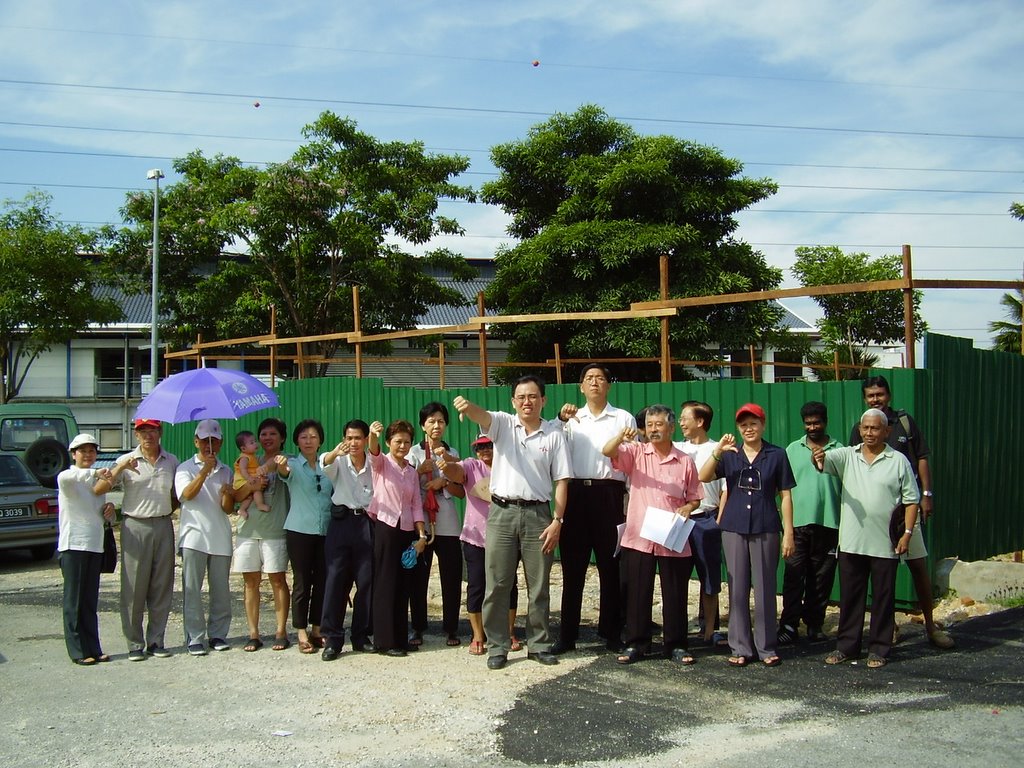
It is already more than a month and yet the local council (Subang Jaya Municipal Council) and the local state assemblyman who is also a MPSJ councilor failed to reply with any outcome on a hillslope project which is to be developed along the fringes of the Ayer Hitam forest reserve.

Residents residing around the area from Sri Penaga Apartment, D’Palma Apartment, Saraka Apartment, Sri Cempaka Apartment, Desa Tanjung Apartment and D’Kiara Apartment have already submitted their disagreement to the Department of Planning and Development, Subang Jaya Municipal Council on 28th March 2006 in an objection hearing between them, MPSJ and the developer involved. The hearing was chaired by Kinrara Assemblyman Kow Cheong Wei.

State investment arm, Permodalan Negeri Selangor Berhad, together with another two developers, Citrasama Sdn. Bhd. and Benua Ehsan Sdn. Bhd. applied to develop the same site. The three developers had applied for a planning permission (Kebenaran Merancang) to develop the area.


According to the Objection Letter by residents from the six apartments mentioned above, they had protested the development project based on the following reason:

1. that Ayer Hitam Forest Reserve is the last piece of green lung available in Puchong and it shall be well-protected by the authority without being turned into any housing projects. Residents have been told by their developer, SP Setia Berhad Group, that this piece of land is another forest reserve which shall not be developed.
2. that the retention pond is also located too close to the hillslope and the pond must be combined with a bigger one for easier supervision in future.
3. that landslide, land erosion, air and water pollution, flash floods as well as other natural disasters can easily take place once the hillslope is developed. After all, over development is another major cause of flash floods and storms took place in Klang Valley recently.
4. that the development will definitely worsen the already congested traffic in Persiaran Wawasan, Persiaran Indera, Persiaran Bukit, Jalan Wawasan 4/12 and the junction going out to LDP.
5. that the Primary School Reserve for Pusat Bandar Puchong is located to close to the main entrance of the project.
6. that the gradient of the hillslope is more that 35 degree which is beyond the maximum allowable gradient for any development projects.

The Sun dated 31st March 2006 has quoted Kinrara Assemblyman Dr Kow Cheong Wei that:

‘
“The matter will first be discussed at the council planning department committee meeting and if it fails to make a decision, then the matter wil be referred to a full board meeting,” he said.

‘“If this entity does not make a decision, then it will be referred to the Selangor Economic Action Council, and subsequently the state executive council,’ he said’

It is a surprise that technical details on the construction and the content of the EIA and traffic report for the project were provided during the objection hearing.

For such a project It is most disappointing that to date, the local council and the state assemblyman had yet to announce any decision or any outcome from various meeting as well as of whether the meeting had been held or not. Local council shall not practice secrecy in their running and any progress on this matter shall be made known to the public.

蒲种爱以淡森林保留地发展计划 - 到底会否实行?

针对蒲种爱以淡森林保留地边缘地带的发展计划,附近居民已经联署反对在该处进行任何发展计划,但是梳邦再也市议会和州议员(同时也是梳邦再也市议员)迄今尚未给与任何答复,即到底有关计划会否继续实行。

来自Sri Penaga、D’Palma、Saraka、Sri Cempaka、Desa Tanjung以及D’Kiara公寓的居民已经在2006年3月28日所举行的一场公听会上联署上书予梳邦再也市议会规划与发展局,表示他们反对在该森林保留地进行任何发展计划。主持该会议的是金銮镇州议员高祥威(高祥威同时也是梳邦再也市议员)。发展商代表也有出席该公听会。

根据市议会发给居民的通知信,申请发展该森林保留地的是雪州资本有限公司(Syarikat Permodalan Negeri Selangor-该公司也是雪州州政府的投资翼膀),Citrasama有限公司以及Benua Ehsan有限公司。这三间公司已经向梳邦再也市议会申请规划批准书(Kebenaran Merancang)以发展该片土地。


根据居民的联署抗议书,他们是以以下理由反对在该区进行任何发展计划:
一、 爱以淡森林保留地是蒲种区尚存在的森林保留地。当局应该极力保护该地,拒绝任何在该地进行物业发展计划的申请。这些居民的发展商,SP Setia当初也向他们承诺,即这片土地是森林保留地,当局不能在该地进行任何发展计划。
二、 有关地段的倾斜度超过当局所批准的35度。
三、 在该地进行任何发展计划将轻易导致天灾的发生,如土崩、泥土侵蚀、空气和水源污染。更何况,巴生谷一带近来因为过度发展而频频发生闪电水灾和风灾。
四、 这项发展计划无疑将会加剧Persiaran Wawasan、Persiaran Indera、Persiaran Bukit、Jalan Wawasan 4/12以及通往白蒲大道出口处的交通拥挤。
五、 有关计划的出入口处过于靠近蒲种市中心的小学保留地。
六、 现有的化粪池过于靠近该山坡,以致它必须与更大的化粪池结合,以便未来的监管。

《太阳报》在2006年3月31日引述金銮镇州议员高祥威的谈话如下:

他说:“有关事项将会在市议会的规划发展局委员会会议中讨论。如果不能达致任何决定,有关事项将会带上去月常会议讨论。”

他也指出“如果还是没有决定,那么这将会带上雪州经济行动委员会讨论,然后是州行政会议。”

令人惊讶的是,有关方面并没有在公听会上汇报有关计划的技术详情、环境评估报告和交通报告。
这项计划将会对当地的大自然环境造成重大的影响,但是地方政府和市议员迄今无法针对有关计划做出任何回应,甚至到底有关方面是否已经召开任何会议讨论此事。这是令人失望的。

我们认为梳邦再也市议会在这事件不应该隐秘行事,反之市议会应该让有关居民知道市议会的决定和事情的最新发展。

Thursday, April 27, 2006

成立警察独委会,打造世界级警察

首相署部长纳兹里披露,政府目前正组织筹设独立监察团(Ombudsman),以全权负责彻查任何人对所有政府部门和官员,包括部长在内的贪污舞弊的指控。

部长也表示上述独立监察团的存在将避免舆论和调查压力过于集中在警方的身上。

虽然国人应热烈响应成立独立监察团的建议,但是如果有人认为监察团成立以后,警方投诉和舞弊独立调查委员会(或简称独委会,IPCMC)就没有必要成立,那是本末倒置的说法。


迫切成立独委会的三大原因

首先,警察皇家调查委员会第一份报告书其中一项最重要的建议就是建议政府成立独委会。警察皇家调查委员会的第二份报告书(针对裸蹲事件)更是重申成立该委员会的迫切性。

成立独委员会的建议连续两次出现在警察皇家调查委员会的报告书,显示警方贪污滥权问题的严重性已经无法通过传统和原有的方式来解决,因此马来西亚还是需要成立警方投诉和舞弊独立调查委员会(或简称独委会)。

部分人士也认为现在已有许多方式监督警方的运作和警员的操守,成立独委会反而是多此一举。问题在于,这些机制不是独立运作的机制。

部分国人把成立独委会看成是羞辱警方,这是不正确的看法。反之,独委会之成立应被视为恢复国人对警方的信心和尊敬的重要策略。

第二、总检查署应该把焦点放在成立警方独委会的工作,并尽快催生独委会的运作架构。政府可以日后依据警方独委会的模式来设定政府行政独立监察团。

其实,独委会可以成为所有政府行政独立监察团之母。良好运作的独委会能够为设立独立监察团文化铺路,间接提升马来西亚的行政效率。

第三、有别于其他政府机构,大马皇家警察部队是国内其中一个能够合法使用暴力的武装部队。因此,人们对警方行事效率的要求自然较一般政府部门高。

警方公信力已是国际课题

也因为如此,2005年共和联邦人权主动报告书(
Commonwealth Human Rights Initiative Report 2005)便围绕在共和联邦警察的公信力。这也就是为何该报告书的主题是〈警察公信力:不能忽略、不能拖延〉(Police Accountability: Too Important To Neglect, Too Urgent To Delay)。

警察的行为是国家治理的重要测量器,他们的表现将会影响一个社会的健全发展。任何一个国家,不管是民主自由的国家,还是专制极权的国家,都得依靠警察服务来维持社会的治安与安宁。不同的在于前者的警察部队能够提供优质的服务,后者则相反。他们之间的差别就在于前者能够协助国家和人民全面享有经济、社会和文化权利。反之,劣质的警察制度将会使国家和社会的灾难。

这再再实实地显示,有关警察改革的议题已经不再是马来西亚人民所关注的问题,而是一个国际课题。那些误以为警察贪污滥权是小问题的人士更应认清现实,正视问题的存在,并且以建设性的方式,设定独委会以协助警察部队重建威信,然后进一步扩大至其他公共服务部门。

我们知道总检察长目前非常关注上述的计划。有鉴于此,总检查署应该从速进行相关的研究工作,并且定时召开公听会,以听取民众的意见,在制定独委会(或独立监察团)方面能够摄取民众的良知建议。

只有这样,我们才能真正摒弃第三世界的思维方式,坦坦白白大大方方地迈向第一世界的思维,建立世界级的警察和公共服务。

Sunday, April 23, 2006

LIFE IN MALAYSIA ... FAIR OR UNFAIR?

Malaysia is a beautiful country to live....Do you think so???

This list cover a period of about 48 years since independence (1957).


1. Out of all the 5 major banks, only one bank is multi-racial, the rest are controlled by Malays

2. 99% of Petronas directors are malays

3. 3% of Petronas employees are Chinese

4. 99% of 2000 Petronas gasoline stations are owned by malays

5. 100% all contractors working under Petronas projects must be bumis status

6. 0% of non-malays staffs is legally required in malay companies. But there must be 30% malays staffs in Chinese companies.

7. 5% of all new intake for government police, nurses, army, is non-malays.

8. 2% is the present Chinese staff in Royal Malaysian Air Force RMAF), drop from 40% in 1960

9. 2% is the percentage of non-malays government servants in Putrajaya. But malays make up 98%

10. 7% is the percentage of Chinese government servants in the whole government (in 2004), drop from 30% in 1960

11. 95% of government contracts are given to malays

12. 100% all business licensees are controlled by malay government e.g. Taxi permits, Approved permits, etc.

13. 80% of the Chinese rice millers in Kedah had to be sold to malay controlled Bernas in 1980s. Otherwise, life is make difficult for Chinese rice millers

14. 100 big companies set up, owned and managed by Chinese Malaysians were taken over by government, and later managed by malays since 1970s e.g. UTC, UMBC, MISC, etc

15. At least 10 Chinese owned bus companies (throughout Malaysia, throughout 40 years) had to be sold to MARA or other malay transport companies due to rejection by malay authority to Chinese application for bus routes and rejection for their application for new buses

16. 2 Chinese taxi drivers were barred from driving in Johor Larkin bus station. There are about 30 taxi drivers and 3 are Chinese in October 2004. Spoiling taxi club properties was the reason given

17. 0 non-malays are allowed to get shop lots in the new Muar bus station (November 2004)

18. 8000 billions ringgit is the total amount the government channeled to malays pockets through ASB, ASN, MARA, privatisation of government agencies , Tabung Haji etc, through NEP over 34 years period

19. 48 Chinese primary schools closed down since 1968 - 2000

20. 144 Indian primary schools closed down since 1968 - 2000

21. 2637 malay primary schools built since 1968 - 2000

22. 2.5% is government budget for Chinese primary schools. Indian schools got only 1%, malay schools got 96.5%

23. While a Chinese parent with RM1000 salary (monthly) cannot get school-text-book-loan, a malay parent with RM2000 salary is eligible

24. 10 all public universities vice chancellors are malays

25. 5% - the government universities lecturers of non-malay origins had been reduced from about 70% in 1965 to only 5% in 2004

26. Only 5% is given to non-malays for government scholarships over 40 years

27. 0 Chinese or Indians were sent to Japan and Korea under "Look East Policy"

28. 128 STPM Chinese top students could not get into the course that they aspired i.e. Medicine (in 2004)

29. 10% place for non-bumi students for MARA science schools beginning from year 2003, but only 7% are filled. Before that it was 100% malays

30. 50 cases whereby Chinese and Indian Malaysians, are beaten up in the National Service program in 2003

31. 25% is Malaysian Chinese population in 2004, drop from 45% in 1957

32. 7% is the present Malaysian Indians population (2004), a drop from 12% in 1957

33. 2 millions Chinese Malaysians had emigrated to overseas since 40 years ago

34. 0.5 million Indians Malaysians had emigrated to overseas

35. 3 millions Indonesians had migrated into Malaysia and became Malaysian citizens with bumis status.

36. 600000 are the Chinese and Indians Malaysians with red IC and were rejected repeatedly when applying for citizenship for 40 years. Perhaps 60% of them had already passed away due to old age. This shows racism of how easily Indonesians got their citizenships compare with the Chinese and Indians

37. 5% - 15% discount for a malay to buy a house, regardless whether the malay is rich or poor

38. 2% is what Chinese new villages get compare with 98% of what malays villages got for rural development budget

39. 50 road names (at least) had been change from Chinese names to other names

40. 1 Dewan Gan Boon Leong (in Malacca) was altered to other name e.g. Dewan Serbaguna or sort) when it was being officially used for a few days. Government try to shun Chinese names. This racism happened in a round year 2000 or sort

41. 0 temples/churches were built for each housing estate. But every housing estate got at least one mosque/surau built

42. 3000 mosques/surau were built in all housing estates throughout Malaysia since 1970. No temples, no churches are required to be built in housing estates

43. 1 Catholic church in Shah Alam took 20 years to apply to be constructed. But told by malay authority that it must look like a factory and not look like a church. Still not yet approved in 2004

44. 1 publishing of Bible in Iban language banned (in 2002)

45. 0 of the government TV stations (RTM1, RTM2, TV3) are directors of non-malays origin

46. 30 government produced TV dramas and films always showed that the bad guys had Chinese face, and the good guys had malay face. You can check it out since 1970s. Recent years, this tendency becomes less

47. 10 times, at least, malays (especially Umno) had threatened to massacre the Chinese Malaysians using May 13 since 1969

48. 20 constituencies won by DAP would not get funds from the government to develop. Or these Chinese majority constituencies would be the last to be developed

49. 100 constituencies (parliaments and states) had been racistly re-delineated so Chinese voters were diluted that Chinese candidates, particularly DAP candidates lost in election since 1970s

50. Only 3 out of 12 human rights items are ratified by Malaysia government since 1960

51. 0 elimination of, all forms of racial discrimination (UN Human Rights) is not ratified by Malaysia government since 1960s

52. 20 reported cases whereby malay ambulance attendance treated Chinese patients inhumanely, and malay government hospital staffs purposely delay attending to Chinese patients in 2003. Unreported cases may be 200

53. 50 cases each year whereby Chinese, especially Chinese youths being beaten up by malay youths in public places. We may check at police reports provided the police took the report, otherwise there will be no record

54. 20 cases every year whereby Chinese drivers who accidentally knocked down malays were seriously assaulted or killed by malays

55. 12% is what ASB/ASN got per annum while banks fixed deposit is only about 3.5% per annum

Friday, April 21, 2006

州政府应下令禁止在集水区建设土埋场

(莎亚南20日讯)雪州民主行动党今日在州主席王志坚的带领下前往雪州州政府大厦提呈备忘录予州务大臣,并要求州政府下令地方议会停止在河流和集水区建设垃圾土埋场。

雪州行动党主席王志坚表示雪州地方议会不应该在靠近河流和集水区建设垃圾土埋场,因为这将轻易污染雪州的水源。


不满庄祷荣答案

雪州行动党在备忘录中也对雪州多媒体、环境和新村发展事务行政议员庄祷荣的言论,即许多地方议会选择在河流旁边建设垃圾土埋场表示不满。

“雪州行动党不能接受地方政府为了节省运输费而冒险牺牲雪州子民的食水安全。”

接受备忘录的是州务大臣机要秘书萨拉莫多拉。

陪同出席的也包括雪州宣传秘书刘永山以及雪州州委陈彼得。刘永山也指出,雪州在短短两个月内竟然发生两起土埋场污水污染水源事件是不能令人接受的,尤其是雪州已经是所谓的先进州。

出现协调不一的现象

他也表示,这显示州政府和中央政府失去在处理州内的固体肥料方面出现协调不一的现象。

“中央政府不能忽略州政府的意愿。我们希望州政府能够颁布白皮书,以让人民了解整起事件的来胧去脉”

他也指出:“由于这些土埋场没有配置污水处理系统,我们也质疑到底环境局是如何批准这些土埋场计划的环境评估影响报告。”

Thursday, April 20, 2006

Memorandum Kepada Kerajaan Negeri Selangor Negeri Maju Oleh DAP Selangor Berkenaan Dengan Pencemaran Air Sungai Di Selangor

20 APRIL 2006

Y.A.B. Dato' Seri Dr Mohd Khir bin Toyo
Pejabat Menteri Besar Selangor
Tingkat 21,
Bangunan Sultan Salahuddin Abdul Aziz Shah,
40503 Shah Alam
Tel: 03-55141119/55447013 Fax: 55190032 SERAHAN TANGAN

Y.A.B. Dato’ Seri,

Memorandum Kepada Kerajaan Negeri Selangor
Negeri Maju Oleh DAP Selangor Berkenaan Dengan Pencemaran Air Sungai Di Selangor


Pengenalan

Pengguna-pengguna air di Lembah Klang dan Selangor sekali lagi dikejutkan dengan kejadian pencemaran air beberapa hari yang lepas berikutan peningkatan mendadak kandungan amonia dalam Sungai Semenyih.

Syarikat Bekalan Air Selangor (Syabas) telah bertindak menutup loji rawatan air di Semenyih jam 8.30 pagi kelmarin apabila kandungan amonia mencapai paras berbahaya 4.8 mg seliter, sedangkan paras selamat tidak boleh melebihi 1.5 mg seliter. Walaupun Syabas berjaya menutup loji air di Sungai Kembong, tetapi gangguan bekalan air juga telah menjejaskan kehidupan orang ramai.


Pencemaran amonia itu berlaku akibat limpahan air kumbahan ke Sungai Kembong yang terletak berhampiran dengan satu tapak perlupusan sisa pepejal kepunyaan Majlis Perbandaran Kajang (MPKj) ketika hujan lebat kira-kira jam 1.30 pagi pada 16 April 2006 selepas benteng yang menakungnya pecah akibat hujan lebat.

Perkara ini bukan kali pertama berlaku di Selangor. Pada 26 Februari lalu, tiga loji di Sungai Selangor dicemari amonia akibat resapan air kotor dari pusat pelupusan sampah Bukit Tagar. Kawasan-kawasan yang mana bekalan air terjejas ialah Kuala Lumpur, Gombak, Petaling Jaya, Kuala Selangor, Ulu Selangor, Klang, Shah Alam dan Kuala Langat. Kandungan amonia dikatakan melebihi paras selamat sebanyak enam kali ganda.

Kejadian-kejadian pencemaran air sungai yang kerap berlaku ini telah membimbangkan orang ramai sama ada air minuman mereka selamat diminum atau tidak.

Pendirian DAP Selangor

DAP Selangor berasa besar hati apabila YAB Menteri Besar telah mengarahkan supaya tapak perlupusan sisa pepejal kepunyaan MPKj itu ditutup.

Biarpun begitu, kami amat prihatin dengan pencemaran air sungai yang semakin berlaku kerana ini tidak jelas sejajar dengan status negeri maju negeri Selangor. Kejadian pencemaran yang pertama pada Februari bukan sahaja telah menjejaskan kehidupan harian pengguna-pengguna air di Selangor, khususnya penjaja-penjaja dan kilang-kilang industri yang terpaksa bergantung kepada bekalan air Syabas untuk beroperasi, malahan air minuman yang tidak bersih ini akan menjejaskan kesihatan pengguna-pengguna air di Selangor.

Lebih-lebih lagi, kejadian pencemaran air yang pertama berlaku pada bulan Februari sepatutnya menjadi satu amaran yang baik kepada Kerajaan Negeri untuk memperbaiki sistem pemantauan dan kawalan pencemaran sungai yang setiap ada supaya perkara ini tidak akan berulang. Malangnya, langkah berjaga-jaga sebegini yang begitu asas tidak diberi perhatian serious oleh Kerajaan Negeri.

Laporan akhbar juga menyatakan bahawa tapak pelupusan sisa pepejal yang terletak berhampiran dengan Sungai Kembung yang menyebabkan pencemaran air sungai ini. Exco Kerajaan Negeri Selangor Datuk Ch’ng Toh Eng yang memegang portfolio Multimedia, Alam Sekitar dan Pembangunan Kampung Baru telah mengatakan bahawa tapak perlupusan sisa pepejal di Selangor biasanya dibina bersebelahan dengan sungai oleh Pihak Berkuasa Tempatan (PBT) demi menjimatkan kos pengangkutan kerana PBT biasanya tidak ingin membina tapak perlupusan sampah di kawasan pedalaman yang berbukit-bukau.

Datuk Ch’ng Toh Eng juga menyatakan bahawa kebanyakan tapak perlupusan sisa pepejal di Selangor didirikan bersebelahan dengan sungai-sungai utama di Selangor. Antaranya termasuk tapak perlupusan sampah di Bukit Beruntung dan Batang Berjuntai.

DAP Selangor tidak boleh menerima alasan penjimatan kos ini kerana pembinaan tapak perlupusan sampah berhampiran dengan sungai-sungai utama akan mudah mencemari bekalan air minuman rakyat Selangor. Tiada apa lagi yang lebih penting daripada kesihatan rakyat Selangor. Kesihatan rakyat dan keselamatan air minuman Selangor tidak harus dikompromi dengan alasan ingin menjimat kos pengangkutan.

Kami berpendapat bahawa pihak berkuasa tempatan di negeri Selangor perlu prihatin terhadap keselamatan air minuman dan kesihatan rakyat negeri Selangor.

Pakar-pakar perubatan telah menyatakan bahawa air minuman yang mempunyai kandungan amonia melebih paras keselamatan jika diminum dalam jangka masa yang panjang akan memudaratkan organ-organ badan dan menyebabkan cirit-birit.

Kami juga berasa kesal kerana kekurangan pemantauan dan langkah-langkah berjaga-jaga di tapak-tapak perlupusan sampah ini sehingga air kumpahan mudah mengalir masuk ke sungai-sungai utama. Walaupun Kerajaan Negeri, khususnya kerajaan tempatan yang terletak di bawah bidang kuasa Kerajaan Negeri perlu memikul tanggungjawab yang besar dalam kedua-dua kes pencemaran air ini, kami juga berasa kesal dengan hujah bahawa pembinaan beberapa tapak perlupusan sampah di Selangor, contohnya tapak perlupusan sisa pepejal Bukit Tagar diluluskan oleh Kerajaan Pusat tanpa mendapat kelulusan daripada Kerajaan Selangor.

Persoalannya ialah bagaimana Kerajaan Selangor dapat membiarkan projek pembinaan tapak perlupusan sampah ini diteruskan oleh Kerajaan Pusat apabila Kerajaan Selangor belum lagi meluluskan projek ini?

Lebih-lebih lagi, tapak perlupusan sisa pepejal ini dibina tanpa dilengkapi kemudahan-kemudahan rawatan air sisa dan air kumbahan. Ini merupakan satu masalah yang sangat serious. Bagaimana sesuatu tapak perlupusan sisa pepejal boleh dibenarkan dan laporan EIAnya boleh diluluskan apabila tapak perlupusan sampah itu tidak dilengkapi dengan kemudahan-kemudahan rawatan air kumbahan, sedangkan kemudahan ini merupakan satu kemudahan yang paling asas dalam mana-mana tapak perlupusan sisa pepejal.

Menteri Sumber Asli dan Alam Sekitar, Datuk Seri Azmi Khalid telah menyatakan bahawa Jawatankuasa Kabinet berkenaan dengan Pencemaran Alam Sekitar yang dipengerusi oleh Timbalan Perdana Menteri, YAB Datuk Seri Najib Tun Razak akan bersidang pada 28 April bagi membincangkan sebaga isu dan dasar yang berkaitan dengan pembuangan sampah pepejal di Lembah Klang.

DAP Selangor berasa kecewa kerana mesyuarat ini sepatutnya melibatkan wakil daripada Kerajaan Selangor kerana yang turut terjejas ialah rakyat negeri Selangor. Bagaimana pula Kerajaan Selangor dapat membiarkan Jawatankuasa Kabinet bermesyuarat dan membuat keputusan sedangkan Kerajaan Selangor tidak dijemput untuk turut hadir bersama dan berkongsi pendapat.

Cadangan-Cadangan:

DAP Selangor dengan itu ingin mencadangkan yang berikut sebagai langkah-langkah untuk menyelesaikan masalah pencemaran air sungai oleh tapak perlupusan sampah:

1. Mengarahkan semua PBT di negeri Selangor untuk berhenti membina tapak perlupusan sisa pepejal yang berhampiran dengan sungai pada masa depan.

2. Menghukum mereka yang mencemari air sungai, termasuk mendakwa mana-mana pegawai PBT yang lalai dan syarikat-syarikat swasta yang mengurus mana-mana tapak perlupusan sisa pepejal yang pernah mencemari air sungai.

3. Memulakan proses perundangan untuk memulihkan pilihanraya kerajaan tempatan. Kejadian ini berlaku kerana sikap tidak prihatin ahli-ahli majlis dan YDP majlis. Ianya boleh dielakkan sekiranya terdapat pemantauan dan penyemakan daripada ahli-ahli majlis yang dipilih oleh rakyat.

4. Mendesak Kerajaan Pusat dan Jawatankuasa Kabinet berkenaan Dengan Pencemaran Alam Sekitar untuk mengadakan satu Extended Meeting dengan menjemput wakil daripada Kerajaan Selangor untuk membincangkan isu ini. Sebarang keputusan Jawatankuasa Kabinet dan Kabinet berkenaan dengan pengurusan sisa dan pencemaran air sungai perlu ditangguhkan sehingga ianya dipersetujui oleh kedua-dua Kerajaan Pusat dan Negeri.

5. Memastikan semua tapak perlupusan sisa pepejal di Selangor dilengkapi dengan sistem rawatan air kumbahan dan mengarahkan semua Pihak Berkuasa Tempatan untuk melengkapi mana-mana tapak perlupusan sisa pepejal yang tiada sistem rawatan air kumbahan dengan sistem berkenaan.

6. Membentangkan satu Kertas Putih ke Dewan Undangan Negeri Selangor untuk menjelaskan kedua-kedua kes pencemaran air ini dengan sejelas yang mungkin dan menyatakan langkah-langkah yang telah dan akan diambil untuk menyelesaikan masalah ini.

Sekian, terima kasih.

DAP Selangor.

呈备忘录予加影市议会,雪行动党:应停止使用土埋场

(加影19日讯)雪州民主行动党今日在州主席王志坚的带领下前往加影市议会成交备忘录,对加影市议会的土埋场上周污染水源表示失望,并向市议会建议关闭改土埋场。

王志坚也表示雪州行动党将会在这个星期日早上八时半在加影锡米山巴莎举办一项签名运动,要求市议会立即关闭有关土埋场,一面雪兰莪河再次遭改土埋场的无水污染。

由于市议会主席再那阿莎德不在办公室,代接备忘录的是市议会主席特别助理沙林达。王志坚也向沙林达预约要求与市议会主席会面,以讨论有关事件。

随同出席的包括雪州宣传秘书刘永山、行动党新加影支部主席傅士祥以及士毛月支部主席颜文昌。

立即停止使用土埋场

刘永山表示,市议会不应该在任何河流旁边建设垃圾土埋场,因为这将容易污染水源。

他也对市议会的土埋场竟然没有建设污水处理系统而感到惊讶,并要求市议会立即停止使用该土埋场,并尽快关闭该土埋场

“污水处理系统是任何一个标准土埋场应该设有的配备。加影市议会的土埋场显然已经违反最基本的环境保护措施。”

王志坚也表示,市议会不能妄顾人民的健康而把土埋场随意建立在靠近水源或集水区的地方。

“如果市议会一意孤行,雪州行动党将会考虑向法庭申请禁令,禁止市议会继续使用该土埋场。”

Monday, April 17, 2006

行动党反对汽油涨价,蒲种14英里派传单

(蒲种16日讯)民主行动党蒲种14英里支部在雪州行动党宣传秘书刘永山的带领下,今天早上前往蒲种14英里巴刹派发反对汽油起家的传单。

八大理由反对调高油价

行动党在传单中表行动党反对汽油涨价的八大理由。这包括:
一、 国有在2004年赚355亿令吉,但是这笔钱却不知道用去哪里?
二、 政府调涨30仙油价所节省的44亿令吉汽油津贴有可能被滥用,而不是用来推动发展或提升公共交通系统。
三、 国阵政府根本阻止不了国内汽油走私到邻国,也没有兑付滥用渔民每公升一令吉柴油津贴的人士,导致我国去年蒙受亏损16亿令吉。
四、 国阵政府误导人民,指我国油价价格仍然是本区域最低的,而事实上却是所有石油输出国中最高的。
五、 国阵政府未制定替代能源政策。
六、 自1997年5月以来,国有提供高达140亿令吉的折扣优惠,给国内最富有家族所拥有的独立发电厂。
七、 1974年,国油一共赚取5千令吉,可是身为石油输出国的马来西亚却没有让人民分到一分钱。
八、 内阁部长与政府高官没有使用公共交通,未曾以身作则,反而要人民改变生活习惯。

要求更大透明度

雪州行动党宣传秘书刘永山表示,雪州行动党将会在接下来的数个星期在全雪州各地派发传单,以让人民知道这些消息。

“他们也向我们反映要求政府展示更大的透明度,以确保不会浪费纳税人的金钱。”

出席这项运动的也包括该支部主席黄心荣以及秘书徐美萍。该支部一行6人从早上八时半便开始向前来巴刹买菜的公众人士派发传单至上午10时,一共派发250张传单。

此外,针对公众人士的热烈反应,支部主席黄心荣也表示这显示公众人士对石油起价已经不满。

Work done in SS4A Petaling Jaya finally after several follow-ups with MPPJ

In reply to my earlier correspondence to MPPJ regarding to the application of SS4A residents to MPPJ, urging the authority to set-up Polyurethane road dividers to prevents vehicles from cutting into Jalan SS4A/4 from Jalan SS2/3, Assistant Director of the Department of Corporate and Public Relation, Pn Azizah binti Kosni has emailed me on 30th March 2006 that MPPJ had extended the existing dividing island to prevent cars from entering from Jalan SS4A/1 (which is painted with double-line).

It was not done only after several correspondence and emails with MPPJ, with the last one being an email sent to the President of MPPJ and copied to Puan Sharipah Marhaini bt Syed Ali (Director of the Department of Planning Development of MPPJ) and Encik Abdul Shukor bin. Mohamed Noor (Director of the Department of Maintenance Development of MPPJ) on 27th February 2006 when the case was first brought up to my attention at the end of 2005.

I was then informed by the residents that MPPJ had finally decided to carry out the job mid March 2006. On 30th March 2006, in her official reply representing MPPJ, Pn Azizah binti Kosni emailed me that the work requested is completed. I expressed my immediate gratitude in my reply to Azizah for the works done.

Though the works are finally done by MPPJ, it is regrettable that there are still some motorists who resist to follow the rules and still cut through the double line. I wish all motorists could strictly follow the rules without endangering the safety of other motorists.

经过和市议会的重重交涉,八打灵再也SS4A居民的要求终于实现。

针对八打灵再也SS4A区居民(投诉从Jalan SS4A/1方向驶来的车辆为了要驶入SS4A从Jalan SS4A/1切进来Jalan SS4A/4)要求市议会装置塑胶路堤,八打灵再也市议会公共关系局助理主任Pn Azizah binti Kosni在2006年3月30日寄送一封电邮给我,表示市议会已经提升现有的洋灰路堤。

经过多次与市议会的周旋,市议会终于进行有关工程。我和市议会通讯的最新纪录就是我在2006年2月26日致给市议会主席(副本寄至市议会规划发展局和维修发展局局长)的电邮。我是在2005年年尾接获居民的投诉。

在2006年3月中旬,居民向我透露,即市议会已经进行该工作。在2006年3月30日,八打灵再也市议会公共关系局助理主任Pn Azizah binti Kosni正式通过电邮,来函告知我市议会已经完成有关工作。我也在我的回应中向Pn Azizah binti Kosni致以万二分的谢意。

虽然市议会已经加长原有的洋灰路堤,大大减少从从Jalan SS4A/1切进Jalan SS4A/4的车辆,但是仍然还有一小撮不负责任的驾车人士趁对面方向没有汽车时偷偷切进来。如此危险的驾驶态度已危害其他驾车人士的安全。我们呼吁所有驾车人士严守交通规则。

Wednesday, April 12, 2006

制定能源政策,打造节约型国家

我曾经表示,国际原油价格一再上涨,政府就必须制定一套完整的国家能源政策,制定实现节约型国家的策略,以使大马在未来的竞争激烈的能源供应市场里能够保有优势。

政府多次呼吁人民改变生活习惯,这显然是其中一项减少依赖石油的长期策略。改变生活习惯是固然必须经历的痛苦过程,但仅仅要求人民改变生活方式,政府机构却无动于衷,我们还是不能转型成为节约型国家。

首相曾经表示国阵成员党全国450万名党员将会在全国各地向人民解释政府提高石油产品价格30仙的原因,以及协助政府监督全国各地的物品价格。首相更表示政府没有什么好隐藏的,而且政府愿意向人民解释政府的立场。

虽然政府在提高石油价格30仙有其理由,但是动用大量人力、财力以及物力(包括通过巨型广告牌)向国民解释却也不是划算的对策,更不是节约型国家的典范。


此次汽油价格上涨掀起民间的不满,归根究底还是政府行政欠缺透明度的问题。以下问题是政府不能不交待的问题:

一、‘把石油津贴供作发展用途’一直都是合理化石油价格调涨的理由。这次也是一样,只是当局的理由比较明确,即把石油津贴省下来的44亿令吉投入一个用以提升公共交通的基金。

如果与去年省下的石油津贴计算在内,当局一共省下数十亿的石油津贴。国民是否能够得到一份报告,交待这笔钱的去向?

根据这次的国会会议议程,财政部长将会在下议院提呈动议,修改1957年财政事务法令(10)(4)(a)条文,即在该条文下的表(二)设立‘公共交通服务信托基金’。

公共交通系统必须进行改革、提升服务、增加路线。只有一个真正能够把你和城市里的其他地方紧密地联结起来,政府才能算是提供替代方案。

我们正殷切等待政府详细交待该信托基金的运作。

二、过于臃肿的行政体系,尤其是庞大的公务员数量及内阁成员,除了降低行政当局的效率、间接鼓吹官僚作风之外,也增加国库的负担。目前,大马的公务员人数已经冲破一百万大关。其中90万是联邦政府公务员。其余则隶属各州政府机关以及地方政府。

当局必须改变行政作风,以短小精悍的办事作风,灵活处理公共事务,务必以最小的资源处理最大的事务。如果要求全民改变生活习惯,那政府更应釜底抽薪,大事改革公共服务。要不然,‘改变生活习惯’的呼吁只不过是乏善可陈的空洞口号。

三、节省能源的工作文化。政府扮演领导性的角色。本区域其他国家的政府在面对国家原油价格高涨之际,纷纷实行节省能源的办公室管理。大马政府是否愿意采纳同样的措施,降低政府部门办公室的能源依赖?

政府是否愿意制定一项条例,调低所有政府部门冷气机的最低温度,既不低于摄氏25度、午餐时间把办公室(服务柜台除外)的电灯和冷气机关上,以及鼓励公务员穿短袖开领上衣,免除开冷气机的必要?

这胥视行政当局在‘改变生活习惯’方面的决心和意志力有多强。作为马来西亚最大的雇主,如果政府能够把大马转型为节约型国家,至少能够逐年减少政府机构对石油的依赖、降低政府机构对能源的需求、提升政府机构的整体工作效率,这不仅可以抵消油价上涨的通膨压力,更可以抵消民众的不满情绪。

与其一再重申政府将不会降低油价,我们更有兴趣知道政府将如何实现节约型国家。

Monday, April 10, 2006

MPPJ should issue an immediate open explanation to Petaling Jaya taxpayers with regards to PJX project

MPPJ conducted a briefing concerning the MPPJ’s proposal to change parts of Petaling Jaya Local Draft Plan (RTPJ1) on 31st March 2006

One of the controversial issue which also caught the attention of the Selangor Mentri Besar was the controversial PJ Exchange (PJX) building project by SBC Corporation, located in Lot 11, Section 52, Mukim Bandar Petaling (car park near the Taman Jaya LRT), in which the status of the car park will be changed to commercial function.

The briefing was organized as part of the requirements of Section 12A of the Town and Country Planning Act 1976, whereby consultation with residents is required before any changes could be carried out.


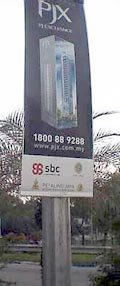
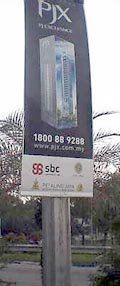
Though, with regards to PJX project, it was launched by Selangor Mentri Besar Datuk Seri Mohd Khir Toyo recently, with banners on PJ roads bearing both the state government’s and the council’s crest. Serious question must be asked on how the council could approve and advertise a project before it was tabled for discussion with residents.

MPPJ Town Planning Department Director Sharipah Marhani Syed Ali and MPPJ President Datuk Ahmad Termizi Puteh were not able to provide satisfactory answera. Sharipah was quoted as saying that “this is a session for us to discuss, debate and negotiate, and I am ever willing to see all of you in another more interactive session in smaller groups to explain these changes further” in her conclusion and that “we will then prepare a report that will take into consideration all the changes from the feedback that we receive.”

In lieu of the seriousness and urgency of the matter, I urge Sharipah and Termizi to immediately come out with an immediate open explanation to clear the doubts and to preserve the integrity of MPPJ.

灵市市议会必须针对八打灵再也交易中心计划事宜向纳税人发表公开声明

在2006年3月31日星期五,八打灵再也市议会为配合八打灵再也发展大蓝图(RTPJ1)修改事项而与居民进行了一项汇报会。

其中一项过后引起雪州州务大臣主席争议性的事项就是由SBC集团发展的八打灵再也交易中心(PJ Exchange,或简称为PJX计划)。这项发展计划是要把靠近Taman Jaya轻快铁地铁站的停车场,即位于八打灵县第52区Lot 11的一片土地,转成商业地。


在还没有正式转换这项土地的功能之前,作为地方政府八打灵再也市议会必须根据1976年城乡规划法令第12A条文下征询居民的意见。要不然,市议会无权修改发展大蓝图中原本已经拟定的土地用途。

吊诡的是,雪州州务大臣拿督斯里基尔早前已经位PJX计划进行推介礼。该计划的宣传海报还印有州政府和市议会的徽章,并且在推介利之后纷纷被挂上灵市的道路两旁。既然州务大臣已经为该计划主持推介礼,为何市议会还要召开汇报会向居民解释土地功能之转换建议?为何土地功能还没有让居民顺利通过,为何州务大臣可以为该计划主持推介礼?

八打灵再也市议会城市规划局主任沙里巴以及市议会主席拿督阿末特米兹无法给予居民满意的答案。沙里巴只能表示‘这是一项让我们讨论,辩论和商量的环节,我乐意在另一个交流环节,通过更小型的小组进一步解释这些事项。’她也总结说‘他们将准备一份报告书。这份报告书将考虑我们所得到的意见。’


由于这属于紧急事宜,我呼吁沙里巴和特米兹能够针对八打灵再也交易中心计划事宜向纳税人发表立即公开声明,证明灵市市议会修改八打灵再也发展大蓝图(RTPJ1)并不是应酬市民之举,并确保所有工作符合所定规则,解除公众人士的疑云,并维护市议会的廉正。

Saturday, April 08, 2006

44 local councils nationwide shall declare their definitions and benchmarks for “indecent acts”

44 local councils nationwide shall declare their definitions and benchmarks for “indecent acts”, and suspend the enforcement of any by-laws to curb “indecent acts” prior to clarifications and acceptance of such definitions and benchmarks pertaining to “indecent acts”, as Malaysians from various walks of life, ethnic, cultural, lingual, territory and religious backgrounds have different understandings, definitions and benchmarks for “indecent act” by members-of-public.

The landmark decision of the Federal Court that kissing and hugging in a public park can be charged with indecent behaviour under Section 8(1) of the Parks (Federal Territory of Putrajaya) By-Laws, 2002 as the said By-law does not infringe Article 5(1) of the Federal Constitution guaranteeing freedom of life has prompted several local councils to declare that they will step up their enforcement on “indecencies” in public parks. According to a Sin Chew Daily report dated 9th April 2006, Alor Setar Municipal Councils claimed that anyone who behaves indecently in public parks will be fined no more than RM300, under By-law Local Government (Parks) 1983.

It is also reported that such by-law also exists in Ipoh. Unfortunately, there are no further explanations, clarifications, definitions or benchmarks related to “indecent acts” or “kelakuan tidak bersopan”.

Perak State Exco (Local Governments Affairs) YB Dato’ Chang Ko Youn said that it depends on how the court interprets “indecent acts”, whereas Kedah State Exco (Transportations, Industry, Trades, Consumers Affairs and Chinese Community Affairs) YB Dato’ Chong Itt Chew mentioned that according to Islamic techings, hugging, kissing and other intimate touching are indecent acts and such acts are prohibited by Islamic teachings.

At the moment, all local councils are empowered to enact and enforce their own by-laws and there are numerous local council which have enacted that “indecent acts” are prohibited in public parks, including DBKL, local councils in Pahang, Kedah, Penang, Negri Sembilan etc.

Another argument which is of equal importance is whether local councils can act as moral police to clamp down “indecent acts”?

Selangor Mentri Besar Dato’ Seri Mohamad Khir Toyo had once claimed that other than Selangor Islamic Affairs Department, local councils in Selangor are not empowered to enact and enforce by-laws pertaining to “indecent acts”. Parliamentary Secretary of the Ministry of Federal Territory, Yew Teong Look echoed that his Ministry is concerned with the decision of DBKL to enact such by-law to prohibit “indecent acts” in public parks.

He said that he has discussed this matter with the Minister Dato' Haji Zulhasnan Bin Rafique and will further discuss this matter “in a day or two”.

In lieu of the situation whereby much confusion caused among members-of-public, all local councils shall immediately announce their definitions and benchmarks on “indecent acts” and suspend the enforcement of any by-laws to curb “indecent acts” prior to clarifications and acceptance of such definitions and benchmarks pertaining to “indecent acts” by members-of-public.

全国44个地方政府应公布“行为不检”和“有伤风化”的诠释和衡量标准

全国44个地方政府应公布“行为不检”和“有伤风化”的诠释和衡量标准,并且在公众人士还没有理清和接受这些诠释和衡量标准之前,暂缓实行取缔“行为不检”和“有伤风化”的地方政府条规,因为对于什么是“不检点”和“有伤风化”的行为,大马不同阶层、民族、文化、语言、区域和宗教背景的人民具有不同的诠释、理解和衡量标准。

在联邦法院裁决地方政府拥有权力制定行为不检点的条例后,许多地方政府已先后声明要严格取缔在公共场所有不道德行为的人士。亚罗士打市政厅指出,在1983年地方政府(公园)条例下,任何人如果在公共场所,做出不文雅或有伤风化行为,可被罚款不超过三百令吉。

4月9日的《星洲日报》报道指出,怡保市政厅及亚罗士打市政厅都有这样的规定,惟没有对“行为不检”(kelakuan tidak bersopan)作进一步说明或举例。

霹雳州掌管地方政府的行政议员拿督郑可扬说,这主要得看法庭如何去诠释“行为不检”;吉打州行政议员拿督张日洲则说, “行为不检”是根据回教教义,两个人在公共场所,不可以拥抱接吻及有肢体上的接触。

目前,各地方政府,即市议会、市政厅和市政局都有权力去制定本身的地方政府条例(by-law)。而且目前有多州的地方政府已制定禁止公众在公园及其他公共场所行为不检的条例,包括吉隆坡市政局、彭亨、吉打、槟城、霹雳及森美兰等。

同样出现争议的是,到底地方政府是否有权立法取缔“行为不检”和“有伤风化”的人士?

雪兰莪州务大臣拿督斯里莫哈末基尔曾经表明,除了雪州回教事务局,其它地方政府部门,不再取缔亲蜜拍拖的情侣。联邦直辖区部政务次长姚长禄则表示,其部门关注有关市政局制定严禁公众在公共场所行为不检的条例。

他说,他已跟部长拿督朱哈斯南讨论此事,并将在近日进一步探讨这问题。

有鉴于地方政府立法取缔“行为不检”和“有伤风化”人士已经引起许多混淆,因此全国44个地方政府应公布“行为不检”和“有伤风化”的诠释和衡量标准,并且在公众人士还没有理清和接受之前,暂缓实行取缔“行为不检”和“有伤风化”的地方政府条规。

Friday, April 07, 2006

The Ministry of Housing and Local Government and DBKL should come out with a full and proper explanation as to why Kampung Bohol is chosen as the prop

Parliamentary Secretary of the Ministry of Housing and Local Government, Dr S. Subramaniam said in the Parliament on 4th April, Monday that the Ministry of Housing and Local Government only serves as a technical consultant whereby the Kuala Lumpur City Hall (DBKL) will be managing the South Kuala Lumpur Transfer Station, which will be collecting solid waste from households in Southern Kuala Lumpur before sending to Bukit Tagar Landfill or Broga incinerators for thermal treatment.

Dr S. Subramanian also said that his ministry will convey the grouses, complaints and opinions of the affected people in that area to DBKL.

It is disappointing that the Ministry was unable to deliver a full and proper explanation pertaining to the construction of the transfer station which is believed to have an adverse impact on people’s livelihood in that area.

Being the manager of the transfer station, the failure of DBKL to provide a public explanation is equally disappointing especially when the issue has been several times highlighted by the press and that the people are eagerly waiting for an answer from DBKL?

Far from being a convincing answer, Subramaniam’s explanation that his Ministry is only serving as a Technical consultant is widely regarded as mere rhetoric without addressing the following issues:
• The EIA report has mentioned that the area is one of the largest residential area in Kuala Lumpur with 79,323 houses in this area in 2000. It is questionable that the area is still regarded as “suitable” for a solid waste transfer station.
• The Selangor state government has claimed that they are not informed of any proposal to build any solid waste transfer station nearby the boundary of Kuala Lumpur – Selangor.

These are among some of the arguments included in a official objection to the EIA report submitted to the Department of Environment on 24th February 2006 filed by DAP Selangor, in which DAP Selangor has yet been informed any decision on the EIA report to date.

Therefore, the Ministry of Housing and Local Government and DBKL should come out with a full and proper explanation as to why Kampung Bohol is chosen as the proposed site for South Kuala Lumpur Transfer Station (SKLTS) when that area is a densely populated area.

房屋及地方政府部和吉隆坡市政局必须提供全面和详细的解释,交待甘榜波何兴建隆南固体废料集运站的原因

房屋及地方政府部政务次长S.苏巴马廉于4月3日在国会表示在隆南固体废料集运站计划中,该部仅扮演技术顾问的角色,反之吉隆坡市政局才是真正管理该废料集运中心。S.苏巴马廉表示该部将会把民间的投诉与不满传达给吉隆坡市政局。

该部显然无法针对这项关系地方居民日常作业和生活的计划提供令人满意、全面和详细的解释。

作为该垃圾集运中心的管理人,吉隆坡市政局迄今无法给予人们一个合理的解释。这也是同样令人失望的,尤其是这课题已经多次出现在报章上,而且人民一直殷切等待市政局的回应。

苏巴马廉表示该部该部仅扮演技术顾问的角色。与其说这是一个令人满意、全面和详细的解释,倒不如说它是一个忽略以下争议的官腔:
• 该计划地环境评估报告书表示该计划位处吉隆坡最大的住宅区之一。吉隆坡士不爹-甘榜波何一带在2000年已有79,323间屋子。在人口如此稠密的地区兴建一座垃圾集运中心是否恰当呢?
• 雪州政府表示他们由始至终并不知道当局要在雪兰莪-吉隆坡边界兴建一座垃圾集运中心。

这些争议都一一列入在雪兰莪州行动党于2006年2月24日提呈给环境局的正式抗议书。迄今雪州行动党尚未接获有关方面的回应。

有鉴于此,房屋及地方政府部以及吉隆坡市政局应该提供一个令人满意、全面和详细的解释,清楚交待有何选择在人口密集的地区兴建隆南固体废料集运中心。

Saturday, April 01, 2006

“第九大马计划-谁将会受益?”的座谈会

民主行动党将会在下周二(4月4日)晚上八时正在雪兰莪中华大会堂二楼举办一场关于第九大马计划,题为“第九大马计划-谁将会受益?”的座谈会。

我们将会邀请著名经济评论家何启斌博士为这场座谈会的主讲嘉宾。除此以外,其他主讲者也包括行动党秘书长林冠英、国会反对党领袖林吉祥、行动党署理主席兼甲洞区国会议员陈胜尧医生。

第九大马计划将会在3月31日由首相拿督斯理阿都拉巴达威在国会提呈。该计划拟定我国在未来五年即2006年至2010年的发展大计和大方向。因此,其所带来的影响是非比深远的。

我们希望能够通过这场座谈会向民众解释第九大马计划的来龙去脉、详细内容、大马的经济发展、国际竞争能力以及其对人民日常生活所造成的影响。

与此同时,公众人士也可以通过这场座谈会发表看法,行动党的国会议员将会收集民情,以便在国会辩论中反映民声。

我们欢迎各阶层人士踊跃出席这场座谈会。

Position Paper on National Energy Policy

Introduction
Increasing petrol prices for the past few years together with the recent 30 sen hike on all petroleum products have served as a wake-up call for all Malaysians.

Although the oil price hike is totally inevitable in lieu of the increasing crude oil price, the government must also at the same time gives serious thought to overcome this entanglement by providing multiple alternatives to the people to avoid being further burdened by increasing oil prices. Similar emphasis shall also be placed on energy efficiency of our industries.

Energy efficiency has been the top agenda of industries nowadays when industrial players are struggling to keep a lower operational cost without sacrificing the quality of their outputs or products. One of the methods to achieve this will be to improve energy efficiency.

In order to achieve this, industrial players are at this moment more than willing to slowly phase out conventional fossil fuel (i.e. diesel, fuel oil etc which are less efficient and eventually be more expensive) and replace it with other energy resources like natural gas.

Although the government calls for “a change of lifestyle”, it must be reminded that unless a comprehensive, sustainable, user-friendly, integrated and affordable public transportation system is in place, there will be very little the general public can do to change their lifestyle. Malaysian vehicles generally still depend on fossil fuel. It will be even more difficult for general public to totally cut off from the pressure of increasing oil price hike as living costs are all directly and indirectly relied on petrol and diesel when alternatives fuels like biodiesel / biofuel are yet marketable in Malaysia.

Therefore, Malaysia requires a comprehensive energy policy to provide strategies and solutions to transform Malaysia into a fuel-efficient and environmental-friendly nation, and also to stay sustainable in terms of energy management and consumption, as well as to ensure a secure energy supply for our next generations.

It must be reminded that the policy must also simultaneously coincide well with other policies, i.e. National Automobile Policy, National Public Transportation Policy as well as National IT Policy.

There are a few pressing reasons why we should look into this issue deeply. These reasons are as followed:

1. Economical reason: a comprehensive planning on how we shall manage our energy resources can protect Malaysia from being continuously affected by soaring oil price.

2. National security reason: future war-fares among countries will not longer be launched based on lands and territories, but on resources and water, which form the most important elements for the survival of human beings.

3. Environmental reason: there is no doubt that the combustion of fossil fuel produces green house gases which cause global warming. Under Kyoto Protocol, industrialized countries shall reduce their emission of green house gases by an average of 5.2 per cent during the first implementation period between 2008 and 2012. Industrialized countries that contribute 55 per cent of the emissions are required to ratify the protocol before it is brought into force.

From here, we shall ask ourselves the following questions:
1. Do we have a long-term solution to ensure that we do not lose out economically especially when Malaysia will become a net oil importer in 2010? If we have, then what are the solutions?

2. Can Malaysians be guaranteed of an undisrupted, stable and undisturbed supply of oil for the next 15 years at least, before Malaysia become a developed nation?

3. By taking into consideration the current consumption rate of fossil fuel, is the government determined to preserve a clean urban environment by cutting down urban fossil fuel consumption, although Malaysia is not a developed nation at the moment?

Current situation
In order to answer these questions, the bigger question lying behind is: Are we a petrol-depending country and how do we measure whether we are a petrol-depending country?

Oil Intensity Index, an often overlooked indicator, measures the quantity of oil required to produce US$ 1 billion of GDP (in this case using 1996 US Dollars). The index assesses each country’s intensity relative to the world average, which is equal to one.

Malaysia was ranked 26th in 2004 with an index score of 1.69 (see attachment), which is above world average index of 1.00. Most developed countries known with comprehensive and sustainable public transportation system and higher efficiency of energy usage ranked lower than world average. All ASEAN countries except Philippine ranked higher than Malaysia in 2004.

Biofuel as an alternative
Much has been mentioned about biofuel but what exactly is biofuel? Biofuel is a blended product of petrol and vegetable oil blended in various proportions. Biodiesel is a very good example of biofuel, in which diesel is blended with vegetable oil at certain percentage.

Biodiesel is a vegetable oil-based fuel that runs in diesel engines - cars, buses, trucks, construction equipment, boats, generators, and oil home heating units. It's usually made from soy or canola oil (which blended biodiesel is also named as First Generation Biodiesel), and can also be made from recycled fryer oil (Second Generation Biodiesel). In Malaysia, the major vegetable oil used is palm-oil.

Other than palm oil, alcohol can also be blended with gasoline. The product of this blended fuel is “Gasohol”. Gasohol is already marketable in Thailand and is widely accepted in Brazil after the 1970s Arab oil embargo.

In order to cut down our reliance on conventional fossil fuels, this will not be achieved if a sustainable, comprehensive, affordable, user-friendly and integrated public transportation system and a variety of fuel alternatives to be selected are not in place. This should form a two-prong strategy for the government to adopt in formulating a policy on this matter.

This paper intends to focus on the second strategy with priority given to biofuels. Other resources such as natural gas will be separated from this discussion.

Increasing dmands for Biofuel in oversea’s market
In UK, the UK government's Renewable Transport Fuel Obligation demands that 5% of all motorcar fuel must come from renewable sources by 2010, bioethanol will be used to fuel a growing number of cars on British roads. Ordinary cars can run on blends of 5% ethanol and 95% petrol, and this is quickly and silently emerging as a standard fuel at Britain's service stations.

But some of the ethanol will be mixed with just 15% petrol to produce a fuel dubbed E85 (since it contains 85% ethanol), which can be used by special biofuel-enabled cars, like the Ford Focus flex-fuel or the Saab Biopower.

Furthermore, signatories of Kyotol Protocol are also bounded to reduce green-air gas by 2012. Coincidently, biofuel can help to reduce pollution by reducing emission of green-air gas.

Looking at the prospect of biodiesel in the European market, there shall be no reason for Malaysia, being the largest palm oil exporter in the world, to be left behind in marketing biodiesel to the European market.

In 2005, Malaysia Palm Oil Board (MPOB) had already announced that it will invest RM 60 million to construct three Biodiesel refineries. These refineries will be built in Port Klang, Selangor, Pasir Gudang, Johore and another one will be built in Labu, Negri Sembilan. MPOB will be holding 50% equity in each refinery. Port Klang refinery is expected to be the first operational refinery.

With these three refineries operational, Malaysia is expected to be major biodiesel producer by 2007. Although this is impossible without the amendment of Petroleum Development Act before biodiesel can be marketable.

What are the benefits?
1) National security – Biodiesel can be produced domestically and this reduces our dependence on imported oil especially when Malaysia expects to be a net oil-importer by 2010.

2) National economy. Using Biodiesel keeps our fuel buying ringgits at home instead of sending it to foreign countries. This reduces our trade deficit and creates jobs.

3) Biodiesel is more sustainable and less toxic compared to fossil fuel. European Commission Biomass Action Plan describes Biodiesel as "the only direct substitute for oil in transport", and as such it is "one of the only two measures that have a reasonable chance of [reducing greenhouse gas emission] on a significant scale in the near future" - the other being reduced emissions from petroleum-powered engines.

4) Controlled emissions. Biodiesel contributes fewer emissions to global warming compared to fossil fuel as it contains vegetable oil. Biodiesel reduces emissions of carbon monoxide (CO) by approximately 50% and carbon dioxide by 78.45% on a net lifecycle basis because the carbon is biodiesel emissions is recycled from carbon that was already in the atmosphere, rather than being new carbon from petroleum that was sequestered in the earth’s crust. A reduction of 65% of particles is also expected and aromatic hydrocarbons which are carcinogen are can be reduced up to 71%. Biodiesel can produce more NOx (nitrogen oxides) emissions but this can be overcome by using catalytic conversion.

5) Engine life. Biodiesel reduces engine wear by as much as one half, primarily because it provides excellent lubricity. Biodiesel also provides smooth engine running with less pollution.

Arguments on Biodiesel
The government should not solely depend on biodiesel to handle energy crisis potentially faced by this country. Biodiesel should not be regarded as an easy way to deal with the soaring petroleum price while reducing the problem of greenhouse gas emissions as it allows people to continue driving petrol-guzzling vehicles, allowing us to continue living unsustainably. Thus, the government must be proactive in finding more alternatives to meet the fuel demands of the people.

Emphasis shall not be placed on biodiesel and its accompanied huge potential profit, but shall be placed on how to diversify the people’s reliance on fossil fuel. Thus other readily available energy resources such as natural gas shall be given equal importance and priority by the government. In short, biodiesel should not be regarded as an “answer-all” solution. Some arguments surrounding the future of biodiesel must be vastly addressed:

1. High demand on palm oil may cause cooking oil shortage – due to its higher profitability and huge market in Europe, palm oil producer will tend to supply more to produce biodiesel, causing less supply to domestic cooking oil industry, indirectly posing pressure to the government to increase the ceiling price of domestic cooking oil.

While we are not sure whether the government is willing to increase the ceiling price of cooking oil due to its possible shortage of supply, the government must realize that the production of biodiesel should never in any situation upset the supply of crude palm oil to the cooking oil industry and the price of cooking oil shall be maintained at an affordable level. The Ministry of Domestic Trade and Consumers Affairs shall come out with an official stand on what are the steps the government will engage as to stabilise the price of cooking oil.

2. Far from being environmentally friendly, climate change experts claim that biodiesel in fact poses a threat as more forest reserve will be cleared for oil-palm plantation, causing devastation of green-lungs instead of improving air quality. Palm oil has been blamed for destroying vast swathes of jungle, pushing endangered animals such as the orangutan to extinction, and creating Southeast Asia's annual haze crisis as plantations are burned off.

For example, most biofuels in the UK are provided by imports, some of which comes from producers whose green credentials are questionable.

The “large market” in Europe is mainly caused by the slow acceptance of biodiesel in the region while regulations had been passed to increase the usage of biodiesel at a certain timeframe. Furthermore, the EU has conceded that it will miss its target of getting 5.75% of transport running on such fuels by 2010. UK is doing particularly badly, with just 0.3% of cars using the fuel. The most advanced country is Austria with 2.5% of the target that they have reached in 2005, but there are other countries that have done very poorly - for instance the UK or Finland.

Looking from this angle, there will be a great market for biofuel in the European market and it is important for the government to fix a proper accreditation scheme to ensure that it will not contribute to pressure on land use, guaranteeing that biofuel crops are not damaging sensitive environments.

3. The government has to depend on plantation companies to produce a fix amount annually to maintain a stable palm oil supply to produce enough biodiesel for both domestic consumption and export purpose. The government has requested plantation owners to commit 5% of their annual production to be utilized for the national biodiesel venture. Indirectly this could cause uncertainties in biodiesel supply and its price, unless the government is prepared to fix the price of biodiesel and provide subsidies.

4. Biodiesel only benefits diesel vehicles, which is not the type of vehicle that most Malaysians are travelling with. In addition to that, Malaysia’s poor diesel quality (of having a sulphur content of about 0.05%, which is at least 10 times higher than high quality diesel suitable for modern diesel engine in Europe) is deterring automobile importers from marketing diesel-driven vehicles in Malaysia automobile market, thus reducing Malaysians’ opportunity to consume cheaper diesel for their drivings.

Therefore, the government shall review its policy of importing high sulphur crude oil from Arabic nations and exporting our low sulphur refined petroleum in order to provide more alternatives to the people in terms of allowing them to use higher quality diesel.

Will the government subsidize biodiesel? How will the government encourage biodiesel?
Despite that biodiesel (B5) will be a direct viable substitute for gasoline, but a big question yet to be answered is its ceiling price.

Although various parties claim that biodiesel will be sold at a lower price than conventional diesel fuel, the government shall also reveal the pricing mechanism for biodiesel and if possible, the government shall be transparent of whether it is prepared to revamp the current pricing mechanism for fossil fuel, especially of whether the government is prepared to subsidize biodiesel when this is a common practice in a lot of countries.

For example, the Thai government taxes heavily on the bulk fuel to subsidize biodiesel in Thailand. This is why biodiesel in Thailand is sold much cheaper in order to promote its usage among the Thais. Government initial decision to place the price of biodiesel at RM1.58 per litre, which is the same as diesel price in Malaysia is not going to help to promote the use of the fuel among motorists. Various incentives must be provided to bring down the ceiling price of the fuel and this shall be done as earlier as possible as to stabilise confidence of industry players and consumers.

Sweden's state-backed bioethanol programme, meanwhile, ensures that there is no duty on the fuel. E85 (85% vegetable oil blended with 15% diesel) -enabled cars are offered free parking in Gothenburg, Stockholm and other municipalities. Biofuel cars are also 20% cheaper to insure and are exempted from the Stockholm congestion charge, while both personal and fleet users pay less tax.

The government shall adopt similar strategy to impose a higher taxation on petrol-guzzling SUVs and to encourage people to use biodiesel or natural gas for their vehicles through various incentives.

Private effort is equally important
Thailand has been the leader, if not the pioneer in the region, in terms of the production and commercialization of biofuel, mainly because Thailand is not an oil producing country, which explains the continued sence of urgency for the government to develop alternative fuels when international crude oil price is soaring high.

Petroleum products available today in Bangkok include Premium Gasoline, Regular Gasoline, Gasohol 95 (a mixture of ethanol and gasoline, which is not marketable in Malaysian market), diesel and also biodiesel.

While Malaysia has yet marketed our biofuel, gasohols and biodiesels are already marketable in the Thai market, due to the cohesive cooperation between the private sector and Thai government. While in Malaysia, the government are still in talks with various plantation companies to commit a fixed amount of annual production for the national biodiesel venture as well as to urge all palm oil refining companies to adopt new technology in their palm oil refineries. This poses worries of whether Malaysia can be a leading biofuel producers in 2007 as envisaged by the government.

Plantation Enterprises and Commodities Minister Datuk Peter Chin Fah Kui was quoted as saying in New Straits Times dated 2nd January 2006 that:

“About 80 per cent of the 70 oil palm plantation companies in Malaysia are reluctant to invest in new technology touted by the Government as labour and cost-effective.

“The technology, called the "continuous sterilisation process", is a more efficient way of milling oil palm fruit. It cooks the fruit before crushing it in an integrated conveyor-belt process to extract crude palm oil (CPO), an important component of biodiesel.

“Companies were reluctant to adopt the new technology due to its RM15 million cost as they are comfortable with the present ways of processing palm oil, which involve many workers.

“Continuation of current practices will risk them of being left behind as Indonesian companies have adopted the method and are aggressively investing in new ways to increase production.”

Thailand’s leading agri-business group, CP Group had recently announced its plan to sell products from its biodiesel project to PTT Plc, the state energy group.

PTT Plc has approached the private company for a marketing proposal. Besides PTT, foreign investors from the United States, Germany, France and Japan have shown interest in being partners of the projects. Thailand government encourages the private sector to setup an output of 300,000 litres per day, could be online next year. Thai government also aims for an output of 8.5 million litres of biodiesel produced per day in 2012, with the intention to make gasohol mandatory in 2008 and the use of biodiesel widely available as an alternative to pure diesel in 2012.

Looking from this angle, one willl be interested to know as to what extend Petronas had committed to provide aids to MPOB’s national biodiesel venture. There shall be a full reveal of how the government is going to engage more local and foreign companies with cutting edge technologies to boast and develop Malaysia’s biodiesel production. Prime Minister Datuk Seri Abdullah Ahmad Badawi’s claim that Petronas has agreed “principally” to cooperate with MPOB to market biodiesel in selected petrol kiosks (Sin Chew Daily, 22nd March 2006) does not provide us the impression that Petronas is committed or is at least ready to spearheading the usage of biodiesel nationwide. Being a national oil company with vast experience in penetrating international oil market, Petronas should become an active player in this sector rather than being a passive by-passer. Petronas should directly and actively involved and engaged in the production, distribution and marketing of the fuel both in international market, just like what its counterpart is doing in Thailand.

Step up research efforts on 2nd Generation Biodiesel
2nd generation biodiesel means biodiesel produced from waste oils and waste cooking oils, or in another words, it is produced from recycled oil, instead of crops.

The major advantage of 2nd generation biodiesel is that the biodiesel industry can reduce its dependency on palm oil plantation to supply vegetable oil, thus saving the environment from being cleared for planting oil palms.

The technology to fully commercialise the fuel is still under study but Malaysia shall have no reason to be left behind if Malaysia is committed to become a major international biodiesel supplier.

Tuesday, March 28, 2006

Gambar-gambar aksi di KLCC pada 26/3/2006

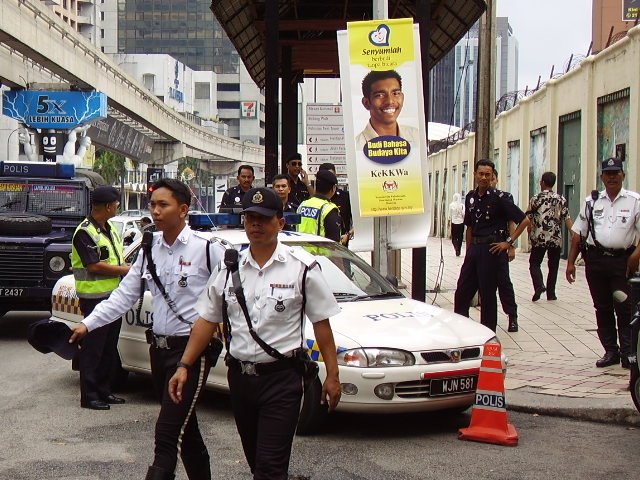
Sekumpulan ahli DAP dan parti pembangkang yang lain berkumpul di hadapan Penjara Pudu untuk memberi sokongan moral kepada mereka yang ditahan semasa berdemonstrasi di hadapan KLCC pada 26 Mac untuk membantah kenaikan harga minyak yang tidak adil. Berdiri di kiri ialah Ronnie Liu dan Teresa Kok (keempat dari kiri).


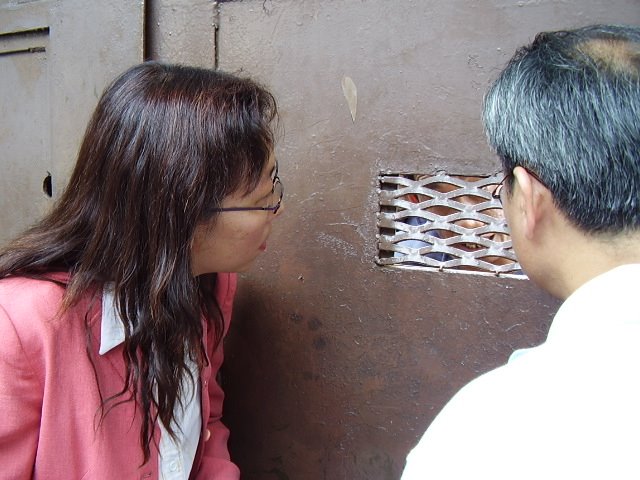
Saya terpaksa mengambil gambar terhadap apa yang berlaku di penjara Pudu melalui lubang kecil ini.


Teresa dan Ronnie berunding dengan "penjaga pintu" Penjara Pudu untuk masuk melihat tahanan-tahanan.


Kelihatan beberapa orang tahanan(duduk di sebelah kanan) yang ditemani oleh beberapa orang anggota Polis. Gambar foto ini terpaksa diambil melalui fungsi "zoom-in" melalui lubang kecil pintu besi Penjara Pudu.
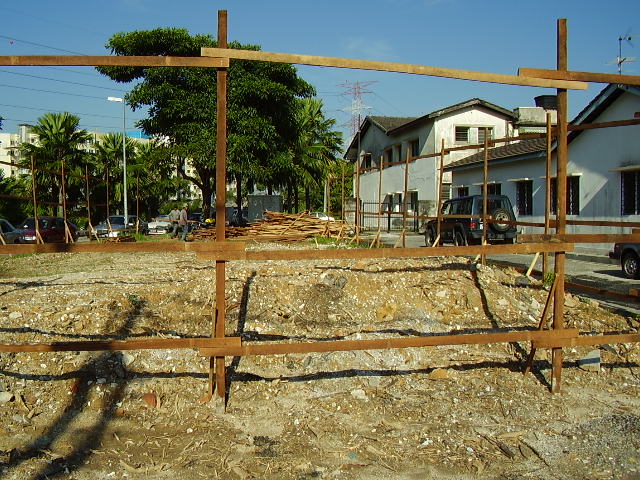


Seorang penunjuk perasaan yang ditahan oleh seorang anggota polis wanita dan dibawa ke lori PDRM.


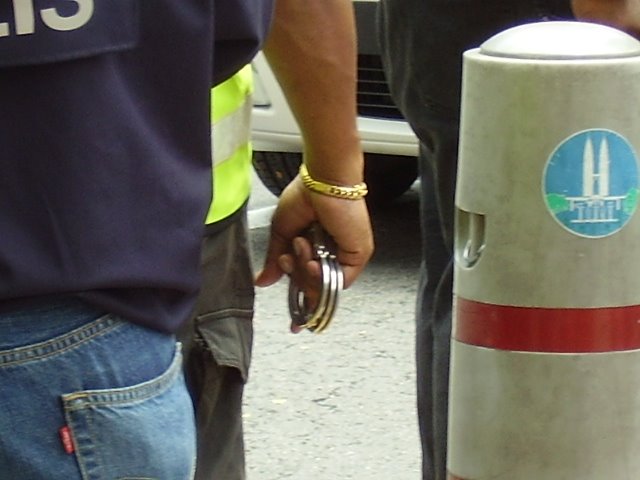
Seorang anggota polis bersedia dengan gari tangannya.


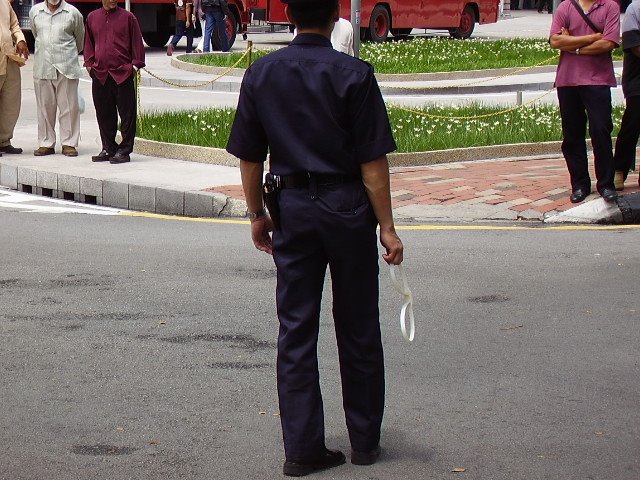
Walaupun Kementerian Kesenian, Kebudayaan dan Warisan (KEK-KWA) menyeru kita untuk berbudi bahasa dan bersenyum selalu, tetapi saya tidak muka semua anggota polis di KLCC dan Penjara Pudu langsung tidak senyum. Mungkin Rais Yatim boleh beri kursus kepada polis untuk bagaimana bersenyum.


Kerana kekurangan besi, polis terpaksa menggunakan plastik jenis "lock-tight" sebegini. Saya difahamkan bahawa plastik ini lebih menyakitkan daripada gari besi kerana semakin kamu menggerakkan tangan yang terikat, samakin ketat pula ikatannya.


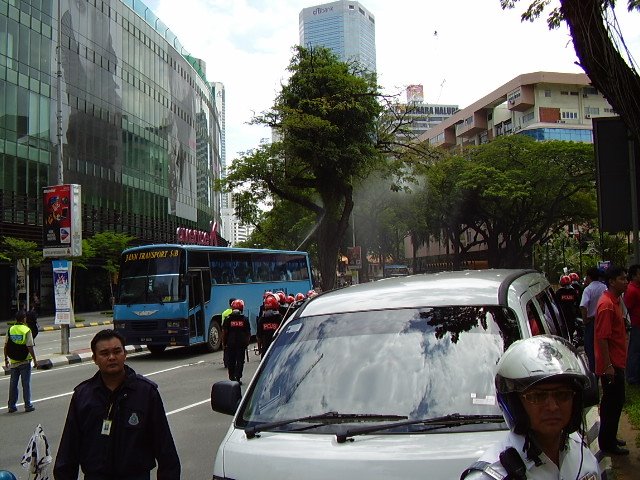
Pancutan yang tidak tepat - Pancutan air gatal oleh FRU tidak kena pada tempatnya, tetapi kena pokok dan air gatal kena balik pada kereta FRU.


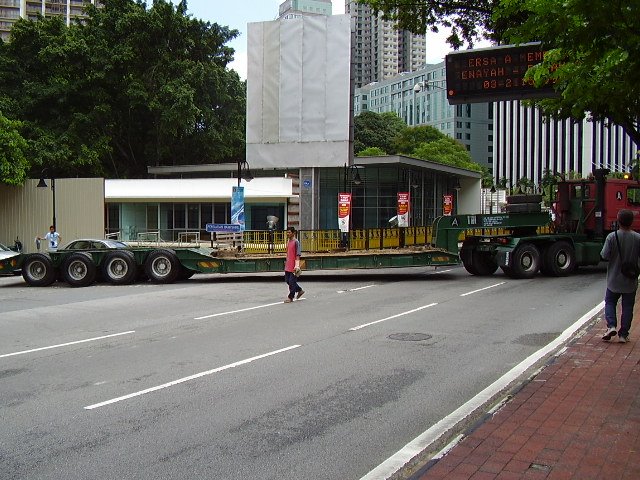
Seorang pemandu lori yang tidak tahu apa yang berlaku pada hari itu tiba-tiba membawa lori panjang besarnya untuk memasuki jalan yang telah ditutup itu apabila FRU sedang berarak untuk menyuraikan orang ramai. FRU terpaksa berhenti sekejap disebabkan oleh lori yang muncul tiba-tiba ini.


Mereka berarak dengan megah, tetapi terpaksa berhenti kerana lori...aiyo!


Orang ramai masih tidak berganjak pada pukul 11:30 pagi dan mereka kelihatan berbaris sepanjang Jalan Sultan Ismail.


Dr Hatta Ramli dan kedua-dua orang anak kecilnya ditahan. Adakah ini tahap kesopanan dan kesusilaan yang ditunjukkan oleh polis kepada budak kecil kita?


Pasukan Polis yang berbilang bangsa? - Demontrasi pada hari itu memperlihatkan ramai anggota polis berbangsa Cina dan India...Harap-haraplah mereka dapat menjalankan tugas dengan adil dan berperi kemanusiaan.


Apabila saya mempunyai masa lapang, saya akan mengambil gambar SB-SB ini yang sembunyi di belakang. Senang sahaja untuk mengenalpasti mereka ini kerana mereka ini biasanya tidak memakai apa-apa tag seperti wartawan.


Seorang lagi SB.


SB ini begitu menumpukan perhatiannya dengan kerjanya. Bolehkah dia dinaik pangkat?


Sampai pasukan FRU berkuda diketengahkan untuk menyuraikan orang ramai.


Demonstrasi oleh penyokong-penyokong PAS.


Helikopter PDRM ini kelihatan berlegas di ruang udara KLCC semasa demonstrasi. Helikopter yang sama juga kelihatan di sekitar ruang udara di Parlimen. Ada yang menyatakan bahawas helikopter ini lagi membazir minyak.


Bolehkah mana-mana orang memberitahu saya mengapa anggota polis ini tidak memakai button badge "Saya Anti Rasuah"?


Seorang wanita Melayu ditahan.

Monday, March 27, 2006

To all my blog readers

Dear Readers,

I will be back blogging soon as I was heavily tied up with the DAP 40th Anniversary Celebration and Party Convention for the past few weeks.

Weng San

Sunday, March 05, 2006

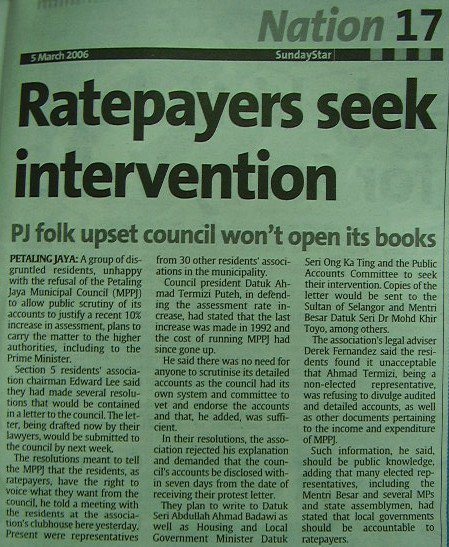
Full support for 25 RAs in PJ to demand MPPJ to allow its account for public scrutiny

DAP Selangor is in full support for a group of 25 Residents Associations (RAs) to submit a joint memorandum to MPPJ to demand public scrutiny of its account, in order to justify the recent 10% hike on assessment rate.

25 RAs from both South and North PJ have agreed to the following five-point resolution:
  1. That PJ Municipal Council (MPPJ) President Datuk Ahmad Termizi shall allow public scrutiny on MPPJ’s account within seven days of the official protest letter and to explain why he refuses to fullfil his earlier promise to allow the account for public scrutiny,
  2. That they shall seek the intervention from the Federal Government and to cast no-confidence vote against the local authority,
  3. That they shall submit a joint-memorandum to MPPJ,
  4. That local government should be accountable, and
  5. That ‘The 3rd Vote’ shall be returned to the rakyat.

It is clearly found that the residents are outraged by the President’s attitude of giving empty promise when he earlier promised to allow the council’s account to be scrutinized by the public. The people are also not satisfied when MPPJ insists with its 10% hike on assessment fees. We believe that it is commendable, rational, legitimate and appropriate for taxpayers in PJ to act so as it will set a role model for the rest in demanding good governance and transparency.

However, Datuk Ahmad Termizi is quoted by today’s The Star as “there was no need for anyone to scrutinize its detailed account as the council had its own system and committee to vet and endorse the accounts and that was sufficient”.

Ahmad Termizi’s statement is not only questionable but also undermines taxpayers’ demands for a clean and accountable local council.

Although local council’s account and budget are to be scrutinized by councilors, they are not elected to the post. Thus the approved account and budget are not supposed to be one that is acceptable to the people. Moreover, demanding local council’s account and budget for public scrutiny shall not be a PR practice for MPPJ, it shall be an annual practice for all local councils in Malaysia.

Therefore, there is an utmost urgency for MPPJ to respond to the five-point resolution adopted by 25 RAs in PJ. As the highest government official in charge of the management and development of Petaling Jaya, Datuk Ahmad Termizi as the Council’s President shall deliver as promised and shall not resort to any flip-flop position. Else his reputation as Council’s President will be severely tarnished.

PJ taxpayers shall also be reminded that not only the Council’s President had made such promise but according to our record, Senior MPPJ Councilor Datuk Dr Wong Sai Hou, who is also the State Assemblyman for Kampung Tunku, has also made similar promise as reported in The Star Metro dated 27th January 2006.

He was quoted as saying:

“The state government had already approved the assessment increase and residents were obligated to pay as the increase was done in accordance with the Local Government Act.”

“However, because certain quarters are unhappy with the decision, the council is willing to open its accounts for scrutiny to representatives from RAs and RTs if they so wish.”

“MPPJ was taking this stance because it did not want to go to war with the residents through the newspapers.”


With this, Datuk Dr Wong Sai Hou shall also be held accountable, if he were “to avoid going to war with the residents through newspaper”.

DAP Selangor also urges MPPJ to also post its budget and detailed accounts on its websites to facilitate quick and easy scrutiny for taxpayers. We do not agree with Council Account Department Director Lulu Goh’s statement that taxpayers can always buy a copy of Government Gazette (a government publication) to access the Council’s accounts.

Huge sum money are spent to upgrade the Council’s website and there is no reason why taxpayers cannot access to crucial information related to the council, as the website shall function to enhance the virtual interactions between the council and the taxpayers. Asking taxpayers to instead buy a copy of the government gazette is rather mind-boggling.

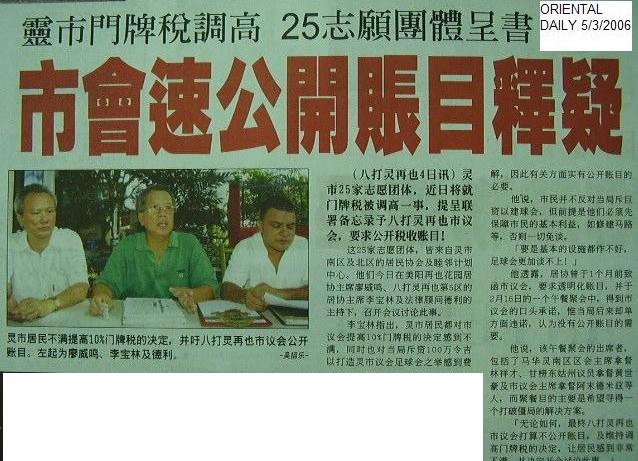
全力支持灵市25志愿团体呈书要求灵市市议会公开账目

针对八打灵再也市议会调高门牌税一事,雪州行动党全力支持灵市25家志愿团体提呈联署备忘录予八打灵再也市议会,以要求市议会公开税收账目的行动。

这25家志愿团体来自灵市南区和北区的居民协会和睦邻计划中心。他们最后达致的五大协议有如一下:
一、 要求市议会主席拿督阿末德米兹公开市议会税收账目,并解释为何违背当初许下的承诺;
二、 要求中央政府接手此事,并对有关官员投不信任票;
三、 准备提呈一份联署备忘录予市议会;
四、 认为地方政府有责任交待账目;
五、 要求交还市民的‘第三张选票’。

很明显地,居民是不满市议会主席出尔反尔的态度。市议会主席本来答应公开账目,尔后却违背诺言。居民也对灵市市议会在欠缺透明度的状况之下一意孤行,调高门牌税10巴仙而感到不满。雪州行动党认为,灵市居民要求市议会公开账目是合情合理的要求,也为全国2600大马公民在争取良好施政方面树立一个典范。


虽然地方议会的账目和预算案必须经过市议员的审核,但由于他们并不具备任何民意代表,因此在道理上地方议会的账目和预算案并不能说已经得到居民的认同。其实,不仅灵市市议会应该每年公开他们的账目,其他地方议会也应该把这当成地方议会的例行公事。

有鉴于此,灵市市议会有必要针对以上五点协议作交待和澄清,尤其是针对第一个协议。作为地方政府的最高官员,市议会主席必须言出必行。要不然,这将严重打击市议会的威信。

此外,雪州行动党也提醒灵市市民,即允让居民审阅市议会账目的决定并不仅是市议会主席的承诺,因为根据我们的记录,灵市市议员拿督黄世豪医生(也是灵市甘榜东姑区州议员)曾经在今年1月26日的《星报大都会》(Star Metro)表示有关调涨已经获得州政府的通过,居民必须缴付新的门牌税。

他曾经表示:“由于市议会不想和居民在报章上掀骂战,因此市议会决定让市民审阅市议会的账目”。因此,黄世豪医生也必须针对市议会出尔反尔的态度交代清楚,以免到最后市议会真的在报章上与居民掀开骂战。

雪州行动党也希望市议会能够把预算案和账目张贴在市议会的网站上,以方便市民随时随刻上网阅读详情。我们并不认同市议会会计部主任Lulu Goh的言论,即市民可以从政府公报(Government Gazette)了解市议会的财务状况。既然市议会已经花费市民的大量税收提升市议会的网站,那么市议会应该充分使用该网站提供居民希望知道的讯息,以加强市议会和居民的虚拟互动。要求市民花钱购买政府公报以了解市议会的财务状况显然不是明智之举。

Saturday, March 04, 2006

Kes ‘air busuk’ di Selangor – Kerajaan negeri perlu membentangkan satu Laporan Kulit Putih

Laporan akhbar Bahasa Inggeris Malay Mail muka surat ke-4 dan ke-6 serta Kosmo muka surat ke-2 hari ini melaporkan sebab-sebab baru punca ‘air busuk’ di Selangor.

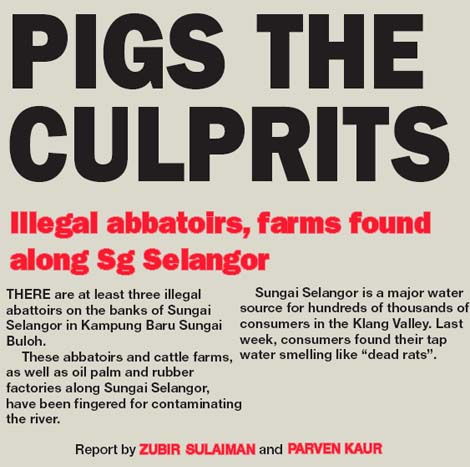
Laporan muka surat ke-4 Malay Mail manyatakan bahawa tapal-tapak penyembelihan khinzir haram telah menyalurkan air sisa ke Sungai Selangor, sekaligus mencemarkan sungai tersebut sehingga menyebabkan bau busuk.

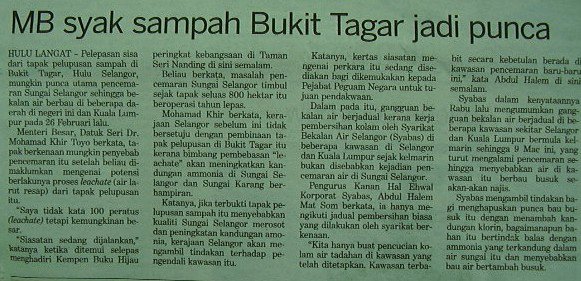
Laporanya pada muka surat ke-6 serta laporan akhbar Kosmo muka surat ke-2 pula menyatakan bahawa Menteri Besar Selangor, Datuk Seri Dr. Mohamad Khir Toyo menyatakan pelepasan sisa dari tapak pelususan sampah di Bukit Tagar, Hulu Selangor mungkin merupakan punca utama pencemaran Sungai Selangor sehingga bekalan air berbau busuk di Selangor. Beliau juga menyatakan bahawa masalah pencemaran Sungai Selangor timbul sejak tapak pelupusan sampah seluas 800 hektar itu mula beroperasi tahun lepas.

Akhbar New Strait Times pada hari Khamis melaporkan kenyataan Ketua Pegawai Eksekutif Puncak Niaga Sdn Bhd, Tan Sri Rozali Ismail menyatakan bahawa syarikatnya tiada kena-mengena dengan kualiti air bekalan. Beliau juga menyatakan bahawa Kerajaan Negeri yang sepatutnya menyiasat siapa sebenarnya yang mencemari Sungai Selangor.


Kenyataan-kenyataan ini telah menimbul persoalan terhadap siapa yang bertanggunjawab terhadap kejadian ‘air busuk’ di Selangor ini. Adakah Kerajaan Negeri, Puncak Niaga, Pengurusan Tapak Perlupusan Sampah Bukit Tagar (yang diurus oleh KUB-Berjaya Enviro Sdn. Bhd.)? Atau setiap pihak pun perlu menanggung sebahagian daripad atanggungjawab?

Kita tidak harus lupa bahawa apabila Projek Perlupusan Sampah Bukit Tagar diumumkan pada November 2004, pihak berkenaan pernah menyatakan bahawa tapak perlupusan sampah itu merupakan tapak perlupusan yang moden dengan mana satu lapisan bahan kalis air yang dibina di bawah tapak berkenaan untuk mengelakkan air sisa untuk meresap ke dalam tanah dan kemudian mencemari air Sungai Selangor. Walapun begitu, Menteri Besar Selangor hari ini pula menyatakan bahawa beliau sangsi terhadap langkah-langkah penjagaan alam sekitar yang dijalankan oleh tapak perlupusan sampah berkenaan.

Lebih-lebih lagi, saya berasa terkejut dengan kenyataan Menteri Besar bahawa “masalah pencemaran Sungai Selangor timbul sejak tapak pelupusan sampah seluas 800 hektar itu mula beroperasi tahun lepas”. Jikalau begitulah kenyataan Menteri Besar, maka mengapa Kerajaan Negeri meluluskan projek ini? Ataupun Kerajaan Negeri terpaksa meluluskan projek ini atas tekanan daripada Kebinet?

Oleh yang demikian, Kerajaan Negeri Selangor Negeri Maju di bawah pimpinan Menteri Besar Datuk Seri Dr Mohamad Khir Toyo perlu mempamekan mentaliti ‘Negeri Maju’ dengan membentangkan satu Laporan Kulit Putih di Sidang Dewan Undangan Negeri Selangor yang akan bersidang pertengahan bulan ini bagi menerangkan sebab-sebab pencemaran air serta tindakan-tindakan susulan yang telah dan akan diambil oleh kerajaan negeri termasuk tindakan undang-undang terhadap mana-mana syarikat yang menyalahi undang-undang.

雪州水供污染事件-州政府应该在州议会提呈一份白皮书

今日的《马来邮报》第4页和第6页分别报道雪州水供污染的原因。《马来邮报》第4页的新闻标题是‘非法宰猪场把河流当作垃圾场’。其内容指出位于双溪毛儒新村的多间非法养猪场把污水直接排入雪兰莪河,导致河水遭受污染,进而造成水供出现异味。

而第6页的新闻标题则是‘州务大臣:土埋场可能已经污染河流’。州务大臣指出虽然他不敢一百巴仙确定武吉达卡(Bukit Tagar)土埋场是导致水供出现异味的主因,但是其可能性是非常大的。州务大臣也表示,自从该土埋场开始运作以后,雪兰莪河便一直遭受污染。

《新海峡时报》周四报道也商业高峰执行董事丹斯理拉查理的言论,即雪兰莪州的水供素质与该公司没有关系。他还指出州政府应负责耿出那些污染雪兰莪和的罪魁祸首。

这已经让雪州子民感到混淆,即到底谁才是真正的罪魁祸首?谁又应该针对雪兰莪河受污染负责任?是州政府?是非法养猪场?是商业高峰?是武吉达卡土埋场的管理层(KUB-Berjaya Enviro Sdn. Bhd.)?还是各造都应负起一定的责任?


我们不应忘记,当初武吉达卡土埋场计划在2004年11月时在报章公布时,有关方面曾经保证即该土埋场是一座现代化的土埋场,其中在土埋场地底架设不透水的保护层,避免污水流入土内,然后污染雪兰莪河。而今天州务大臣却对该土埋场的环保措施表示质疑。雪州行动党对州务大臣的言论,即‘自从该土埋场开始运作以后,雪兰莪河便一直遭受污染’而表示惊讶。如是如此,为何州政府当初允许在该处建设土埋场?州政府是否是在内阁压力下批准建设该土埋场?

既然州务大臣基尔已宣布雪州为‘先进州’,他就必须拿出先进州的思维,在州议会提呈一份白皮书,以详细解释水供污染的原因、州政府正在和即将采取的解决方案以及是否将会采取任何法律行动对付有关公司。

Mengecam keputusan MPPJ yang tidak mengormati hasrat penduduk-penduduk tempatan dalam perancangan bandar

Majlis Perbandaran Petaling Jaya (MPPJ) sekali lagi dikecam kerana tindakannya meluluskan Kebenaran Merancang tanpa mengambil kira pandangan dan bantahan daripada penduduk-penduduk tempatan.

Penduduk-penduduk yang tinggal di sekitar Jalan 20/24, Taman Paramount, Petaling Jaya telah mengadu kepada DAP Selangor bahawa sekeping tanah kosong yang terletak di jalan berkenaan telah diberi Kebenaran Merancang kepada seorang yang bernama Quah Peng Chin @ Quah Paik Sze membina sebuah bangunan pusat perkhidmatan dan pejabat.

Mereka diberitahu tentang keputusan MPPJ ini dalam satu surat yang bertarikh 6hb Februari 2006 [Nombor Rujukan: (34) dlm.MPPJ/JPB331/T/P23/S21/1819/2003]. Apa yang tidak diterima oleh penduduk-penduduk persekitaran ialah mereka ini yang tinggal berdekatan dengan lot tanah berkenaan telah mengeluarkan bantahan sebulat suara terhadap projek pembinaan ini sebanyak dua kali pada tahun 2003 dan 2004.
h

Keputusan MPPJ yang masih berterusan dengan meluluskan projek ini adalah amat mengecewakan kerana keputusan MPPJ ini tidak berpandukan prinsip demokrasi, ketelusan dan pentadbiran baik (good governance) di mana MPPJ sepatutnya menjunjung keputusan sebulat suara penduduk-penduduk setempat. Tuntutan DAP Selangor yang pertama terhadap MPPJ ialah supaya MPPJ untuk menyatakan di bawah apa bentuk peruntukan perundangan pihak MPPJ membuat keputusan yang bersifat unilateral and autokratik ini dan mengapakah MPPJ tidak menyenaraikan sebab-sebab MPPJ meluluskan Kebenaran Merancang ini seperti yang dijanjikan dalam perenggan keempat surat MPPJ kepada penduduk-penduduk ini yang bertarikh 30hb September 2003 [Nombor Rujukan: (11) dlm.MPPJ/JPB331/T/P23/S21/1819/2003].

Adalah menjadi kemestian untuk setiap projek pembinaan yang ditabung oleh kerajaan atau pihak swasta untuk mendirikan papan tanda dengan menyatakan maklumat-maklumat terperincinya. Walapun begitu, tinjauan DAP Selangor di tapak berkenaan juga mendapati Tetuan Quah Peng Chin @ Quah Paik Sze sudah memulakan kerja-kerja membersih tanah tanpa mendirikan mana-mana papan.


Pihak kami telah dimaklumkan bahawa tanah ini digunakan untuk mendiri pejabat dan pusat perkhidmatan dengan mana pihak kami ingin bertanya sama ada projek ini ialah projek pembangunan MPPJ atau mana-mana agensi kerajaan yang lain. Sekiranya projek ini ialah projek MPPJ, maka pihak MPPJ mesti menjelaskan mengapakah papan tanda ini tidak didirikan di tapak ini.

Dalam pada itu, DAP Selangor juga berasa terkejut dengan pembersihan tanah ini kerana apa yang diluluskan oleh MPPJ hanya ialah Kebenaran Merancang sahaja dimana ianya tertakluk kepada syarat-syarat tertentu seperti yang tertulis dalam surat MPPJ bernombor siri (34) dlm.MPPJ/JPB331/T/P23/S21/1819/2003. Pihak kami ingin mendapat penjelasan daripada MPPJ samada Tetuan projek ini sudah menyerahkan pelan bangunannya untuk diluluskan atau tidak. Sekiranya tidak, mengapakah Tetuan boleh membersihkan tanah itu?

MPPJ perlu memberi penjelasan terhadap semua kemusykilan ini kerana Pihak Berkuasa Tempatan perlu menjadikan budaya integriti dan bertanggungjawab sebagai budaya kerja. Ketidakadilan yang berlaku terhadap penduduk-penduduk di Taman Desa Ria pada November 2005 tidak harus berulang pada penduduk-penduduk di Taman Paramount ini.

Friday, March 03, 2006

批评灵市市议会作出专制和单方面的决定

灵市市议会因拒绝遵从地方居民的意愿,发出策划批准书而被批评。

一群居住在八打灵再也百乐花园第20区第24路的居民日前向我投报,即灵市市议会在绕过居民意愿的情况之下,批发策划批准书予Quah Peng Chin @ Quah Paik Sze,以在该路尾段的一片狭小的空地建设一座服务中心和办公室。

灵市市议会是在2006年2月6日的一封公函中通知居民市议会的决定(参考编号:(34) dlm.MPPJ/JPB331/T/P23/S21/1819/2003)。虽然居民曾在2003年和2004年两次反对该计划,但是市议会依然坚持己见。这是居民所不能接受的。

市议会的决定是令人失望的,因为这已经违反民主、透明度和良好施政的原则。


灵市市议会必须交待第一个问题就是市议会是基于什么法律基础做出这项单方面的决定。为何市议会没有交代清楚其批准规划批准书的原因,正如其在2003年9月30日一封公函中所承诺的(参考编号:(11) dlm.MPPJ/JPB331/T/P23/S21/1819/2003)。

更何况,任何公共或私人建筑计划都必须竖立一个计划告示牌,以让人们知道更多关于该计划的详情。然而,雪州行动党发现Quah Peng Chin @ Quah Paik Sze竟已经清理该地,开始动工。如果该计划是市议会的工程,那么灵市市议会应该解释为何他们不需竖立任何告示牌?

必须知道的是,市议会发出的是规划批准书,而不是最后的批准书。正如市议会公函所提及(参考编号:(34) dlm.MPPJ/JPB331/T/P23/S21/1819/2003),该工程的拥有者在动工之前尚需符合许多条件。我们质疑到底该工程的拥有者是否已向灵市市议会提呈最后的建筑物蓝图以供批准。

在廉正、透明度和负责任的大原则之下,这些都是市议会必须交待的重大问题。2005年11月发生的Taman Desa Ria居民起诉灵市市议会胜诉的事件实不应在今日在此发生在百乐花园的居民身上

Wednesday, March 01, 2006

Guang Ming strikes back!

Guang Ming Daily News Evening Edition strikes the street again!

After being suspended two weeks, Guang Ming Daily Evening Edition comes back with their new re-launch ceremonies in several places on 1st March night.

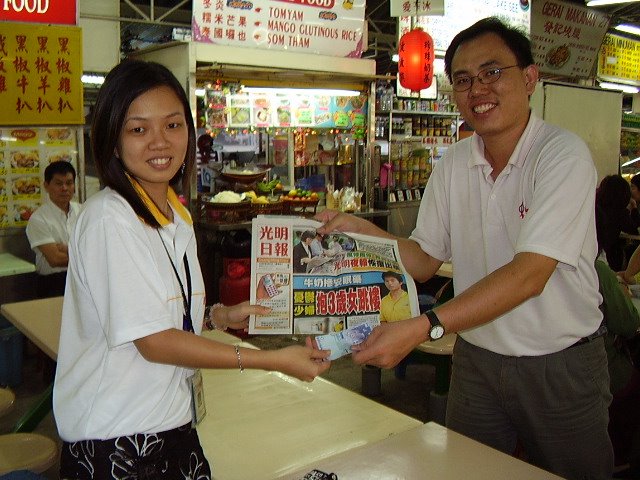
I was in PJ SS2 Selera Makan foodcourt on that day and I managed to buy a copy of the paper. In the photo is Ho Shin Yee (Guang Ming Journalist) handing a copy of the paper to me.

Guang Ming Daily evening edition had been suspended for two weeks from 15th February to 1st March for publishing a photo depicting caricatures on Prophet Mohammad which Muslims considered blasphemous.

It was a joyous moment for Guang Ming to come back with their evening edition. When I was interviewed by Shin Yee, I express concern and worry that whether recent actions from the government will tighten self-sensorship among among editors.

I also hoped that Guang Ming shall continue to stay on the course to expose injustices and corruptions in this country.